
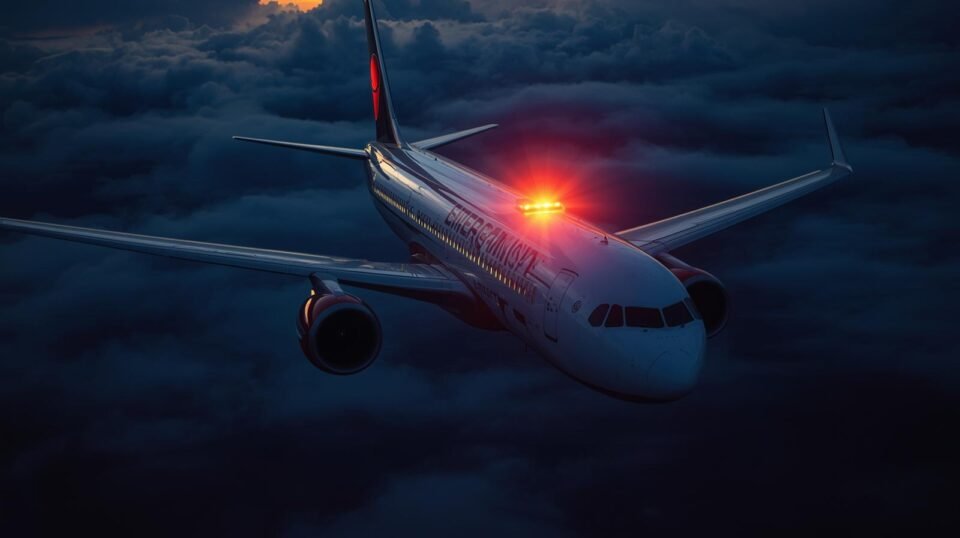
Aviation emergencies capture public attention because they remind us how quickly routine travel can shift into high-stakes decisions. One recent incident that did exactly that was Flight U22238’s emergency declaration and subsequent diversion during a scheduled flight from Copenhagen to Manchester. The way the crew handled the situation, air traffic control responded, and emergency services stood ready demonstrates how modern aviation safety systems function in real world conditions.
In this extensive guide, we look at Flight U22238, the emergency declaration, why it happened, the key role of the transponder “squawk 7700” signal, how the aircraft diverted and landed safely, and what this incident tells us about airline crisis management. We also discuss how aviation professionals train for these events, how passengers can stay calm and informed, and why declaring an emergency even for non-technical issues like a medical crisis is always the safest option.
What Was Flight U22238?
Flight U22238 was a scheduled easyJet service operating between Copenhagen Airport (CPH) in Denmark and Manchester Airport (MAN) in the United Kingdom on October 27, 2025. The flight used an Airbus A320-200 aircraft, a narrow-body airliner that is widely used in short and medium-haul flights across Europe. The aircraft involved was registered as G-EZPB, an airframe that had been in service with easyJet for several years.
The flight departed Copenhagen shortly after 22:20 local time, with passengers expecting a standard two-hour journey to Manchester. Aboard were around 170 passengers and several crew members.
What Is an Emergency Declaration in Aviation?
In aviation, the term emergency declaration refers to the moment when a pilot or flight crew signals to air traffic control that the aircraft is facing a serious issue requiring priority handling. Pilots use a special transponder code squawk 7700 which instantly alerts all relevant ground radar systems that the flight is in an unplanned emergency situation and needs attention.
An emergency declaration does not automatically mean a crash or technical failure. It can cover:
- Serious medical emergencies onboard
- Mechanical or technical issues
- Fuel shortages
- Weather-related concerns
- Other situations where crew judgment says immediate action is safest
Pilots are trained to err on the side of caution, and declaring an emergency ensures that air traffic control gives them maximum support, including routing changes, priority landing clearance, and coordination with emergency responders.
How the Emergency Happened on Flight U22238
For Flight U22238, the flight crew declared an emergency shortly after cruising altitude was reached over the North Sea. The aircraft was on its way toward the east coast of England when a passenger experienced a serious medical issue that required immediate attention.
Because Manchester was still some distance away, the captain and crew made a quick decision: they changed the flight’s destination to Newcastle Airport (NCL), where emergency medical teams could meet the aircraft swiftly upon landing. This diversion was made possible thanks to the emergency declaration that prioritized their request with air traffic control.
What the “Squawk 7700” Signal Means
When the crew activated squawk 7700, the aircraft’s transponder broadcast a universal emergency code recognized by all radar and air traffic systems. The code signals that the flight is facing a serious issue and needs priority routing and handling.
Here’s what happens when squawk 7700 is used:
- Air traffic control receives an automatic alert
- Other aircraft in the vicinity are informed of the emergency
- Flight path can be adjusted quickly
- Emergency responders at airports can be notified early to prepare
This system is critical because it creates an automated signal that bypasses lengthy explanations and lets controllers act fast.
Diversion to Newcastle Airport
Once the emergency was declared, Flight U22238 turned away from its original Manchester route and headed toward Newcastle Airport on the northeast coast of England. This airport was selected because it was closer than Manchester at that time and had the capacity to receive a diverted aircraft and support emergency services on the ground.
The Airbus A320 landed at approximately 22:45 local time, where paramedics and medical teams were already standing by to assist the passenger in need. Emergency vehicles with lights and sirens accompanied the aircraft as it taxied into position.
Passengers reported that communication from the flight crew remained calm and clear, helping maintain composure in the cabin even as the situation unfolded. Many passengers later noted the professionalism with which the diversion was handled.
What Happened After the Landing
After the aircraft landed safely in Newcastle, airport medical crews boarded the flight to attend to the affected passenger. The individual was transferred to local medical facilities for further care. No other passengers were injured during the incident.
Once the situation was stabilized and the medical priority was handed over, the aircraft remained on the ground for a short period. The flight then departed again at around 00:02 local time and finally arrived at Manchester Airport about 30 minutes later.
Why Declaring an Emergency Was the Right Call
Many passengers may wonder if diverting a flight and making an emergency landing is necessary for a medical situation. The answer lies in safety protocols:
- Medical conditions on aircraft can escalate quickly.
- Cabins are not equipped to treat serious illnesses fully.
- The nearest suitable airport with emergency services must be chosen.
- Flight crews do not hesitate to divert when lives are at stake.
In this case, the diversion ensured the passenger got immediate help without putting others at risk. Declaring an emergency gave the crew priority from air traffic control, allowing them to deviate from the original path in the safest possible way.
How Air Traffic Controllers Support Emergency Flights
When a flight declares an emergency, every air traffic controller in the sector coordinates to:
- Clear the flight’s path
- Re-route nearby traffic if needed
- Prepare the destination airport’s emergency teams
- Offer weather and traffic updates
This is why declared emergencies rarely result in additional problems the system is built precisely for these scenarios.
Emergency Response and Passenger Safety
Airlines train their crews extensively on emergency procedures, including:
- Medical emergencies
- Engine or mechanical issues
- Smoke or fire indications
- Loss of pressurization
- Evacuation procedures
Flight attendants carry medical kits and basic oxygen supplies, but when a condition goes beyond cabin care, diversion is the standard practice.
What Passengers Should Know About Emergency Landings
Passengers might feel uneasy when an emergency is declared, but understanding the process helps:
- Pilots only declare emergencies when necessary
- Crews are highly trained for these situations
- Airports have pre-planned emergency procedures
- Communication is key before, during, and after the diversion
Most importantly, the system is designed so that emergencies lead to safe outcomes, not panic.
Other Common Reasons Flights Declare Emergencies
While Flight U22238 was a medical emergency, other common reasons for emergency declarations include:
- Low fuel situations
- Technical or warning system alerts
- Unusual smoke or odor in cabin
- Severe weather deviations
- Threats onboard (rare)
Every declared emergency triggers the same priority system, which helps flights land safely and quickly when needed.
Why This Incident Matters to Aviation Safety
Flight U22238’s emergency declaration highlights several important points in aviation:
- Safety is the top priority
- Emergency systems work as designed
- Quick decisions save lives
- Coordination between pilots and controllers is seamless
- Passengers benefit from structured response plans
These lessons are valuable not only to the aviation industry but also to travelers who rely on these systems every time they board a plane.
Final Thoughts: What We Can Learn
Flight U22238’s story is a reminder that modern aviation is resilient and responsive. A medical emergency onboard could have been handled poorly in earlier eras, but today’s technologies, protocols, and training ensure every situation is treated with urgency and care.
Every emergency landing makes the system stronger because lessons are learned, reviewed, and integrated into future training. For passengers, understanding these procedures builds confidence in flying even when unexpected events occur.
